The pull of gravity on a distant star can now be measured more accurately, shedding light on other worlds, say astronomers.
The method makes it possible to study even the faintest of stars.
"Our technique can tell you how big and bright is the star, and if a planet around it is the right size and temperature to have water oceans, and maybe life," said Prof Jaymie Matthews.
Surface gravity is the intensity of the force that pulls everything on the surface of a star or celestial body towards the centre.
It is usually calculated by measuring a star's light or brightness - but this only works well for the closest, brightest stars.
A team led by Thomas Kallinger of the University of Vienna used data from theKepler space telescope - which is searching for other worlds like the Earth - to show that variations in the brightness of distant stars can give more accurate measurements of surface gravity.
The timescale of turbulence and vibration at a star's surface, based on its brightness variations, tells you its surface gravity, say the researchers.
Future space missions will hunt for planets around distant stars that might be capable of harbouring liquid water oceans and perhaps life.
The method can be applied to data from these searches to help understand the nature of stars like our Sun and to help find other planets like our Earth, says Dr Kallinger.
Earth-sized world
Since surface gravity depends on the star's mass and radius, the method should also help astronomers work out the masses and sizes of distant stars - and any planets circulating around them.
"If you don't know the star, you don't know the planet," said co-researcher Prof Matthews of the University of British Columbia, Canada.
"The size of an exoplanet is measured relative to the size of its parent star.
"If you find a planet around a star that you think is Sun-like but is actually a giant, you may have fooled yourself into thinking you've found a habitable Earth-sized world. "
UK soldiers who fought in the Iraq War may face prosecution for war crimes, according to the head of a unit investigating alleged abuses.
Mark Warwick said there were "lots of significant cases" and that discussions would be held over whether they met a war crimes threshold.
Lawyers are continuing to refer alleged abuse cases by soldiers to the Iraq Historic Allegations Team (IHAT).
The Ministry of Defence said it took such allegations "extremely seriously".
Two public inquiries have already looked at claims against UK troops in Iraq.
Mr Warwick, the former police detective in charge of IHAT, told the Independentthe allegations being investigated included ones of murder.
He added: "Over the next 12 to 18 months, we will review all the caseload to better understand the picture and then I think we can say whether 2019 seems realistic."
The inquiry has considered at least 1,515 possible victims, of whom 280 are alleged to have been unlawfully killed.
'Wholly unacceptable'
He said: "We would look at the credibility of the allegation in the first instance and, when we've looked at a lot of these extra cases coming to us, some of them are duplicates of cases, some of them we've already identified as part of our own investigation process, and some are multiple allegations, where we would investigate as a single allegation."
IHAT's budget of £57.2m runs until the end of 2019 - 16 years after the invasion of Iraq began in 2003.
BBC political correspondent Chris Mason said Mr Warwick's comments may have been a response to an interview by Michael Fallon in the Telegraph.
In it, the defence secretary said soldiers were inhibited on the battlefield because they feared "ambulance-chasing British law firms" would haul them in front of the courts on their return.
Carla Ferstman, director of the human rights charity Redress, also told the newspaper that the "incredibly slow pace" of IHAT's investigations was "wholly unacceptable".
He added: "Things seem to still be moving at a snail's pace. We call upon the government to ensure IHAT can, and does, do what it was set up to do, and to do it now. This cannot be a whitewash."
Colonel Richard Kemp, a former army commander in Afghanistan, agreed that the investigation needed to be completed urgently, but said it was "inconceivable" that that number of allegations against British troops could be legitimate.
"Of course one has to be concerned about these allegations, but the number, the sheer number, thousands of allegations made against British soldiers in Iraq, I just cannot believe that any significant number of them can be valid," he told BBC Radio 4's Today programme.
'Corporate failure'
A spokeswoman for the Ministry of Defence said most members of the armed forces behaved correctly.
She added: "The vast majority of UK service personnel deployed on military operations conduct themselves professionally and in accordance with the law.
"Where there is sufficient evidence, members of HM Forces can be prosecuted. It is estimated that the Ihat's work will take until the end of 2019."
An inquiry into claims of abuse by UK troops in Iraq highlighted the death of 26-year-old hotel worker Baha Mousa, who died in UK military custody in September 2003.
It concluded in September 2011, with inquiry chairman Sir William Gage blaming "corporate failure" at the Ministry of Defence for the use of banned interrogation methods in Iraq.
The Al-Sweady Inquiry, set up in 2009, followed allegations made in judicial review proceedings at the High Court that the human rights of several Iraqis were abused by British troops in the aftermath of a firefight with insurgents near the town of Majar al Kabir.
Inquiry chairman Sir Thayne Forbes said allegations that troops murdered and mutilated Iraqis in custody were "wholly without foundation". But he did conclude that some of the detention techniques had amounted to mistreatment.
Defender Phil Jones has lent his support to his manager saying he was doing a "terrific" job at the club.
Frenchman Wenger, 66, added: "I do not want to go into a world of speculation.
"I personally have a huge respect for Louis van Gaal and I think what is going on there is disrespectful.
"This guy has worked for 30 years in football and has delivered unbelievable quality of work. I think a lot has been made on [Mourinho's departure], and I do not need to add anything."
But to make the announcement in December does not sit right with Wenger.
He said: "I don't like the fact that the managers come out so early for what they will do, because it's not necessarily good for their own team, nor for the speculation about the managers who are going through a little bit of a difficult patch."
Asked if he would encourage Guardiola to come to England, Wenger replied: "Yes, I would welcome [him] to the competition."
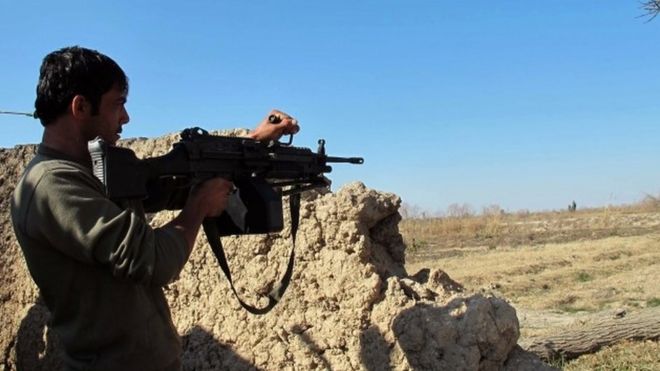
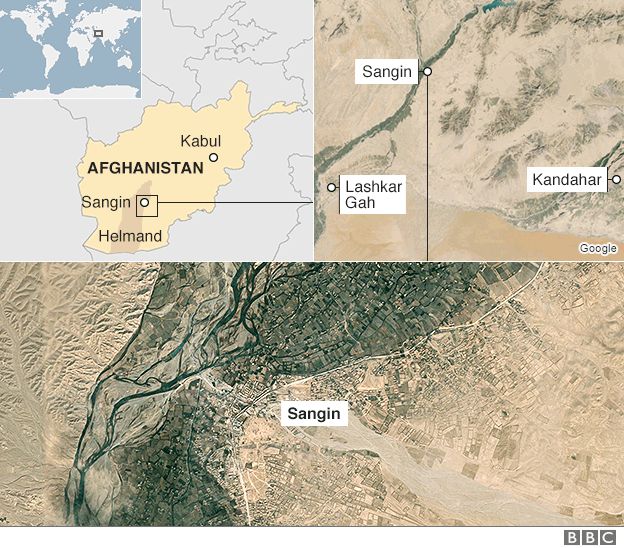
Afghan government forces have lost control of the centre of the town of Sangin in Helmand province after days of fierce fighting, reports suggest.
Eyewitnesses told the BBC the Taliban controlled the local government building and police station.
The Taliban say their fighters have seized the entire district and that their flag is flying over Sangin.
However, the Afghan defence ministry said fighting was continuing and that reinforcements had been sent.
Eyewitnesses say some government forces are still fighting in the district centre but are cut off.
District governor Haji Suliman Shah told the BBC he had been airlifted from the district headquarters to Shorabak base - formerly Camp Bastion - in Lashkar Gah early on Wednesday, along with 15 wounded security force members.
Meanwhile Ashuqullah, a police officer with an Afghan army brigade at a barracks about 7km (four miles) from Sangin, told the BBC the "entire" town was controlled by militants.
"Support troops have been airdropped at a distance... but all roads are blocked and in the militants' control," he added.
He said a few hundred members of the security forces were besieged at the barracks.
Sangin was a key focus of Nato's involvement in Afghanistan.
Helmand province has been a major centre of the Taliban insurgency with important supply routes for the opium trade.
Its proximity to Pakistan also gives the area a broader strategic significance.
Afghanistan's acting Defence Minister Masoum Stanikzai described the situation in Helmand as "manageable" and said fresh support troops had been sent in.
However the evacuation by air of the top government official from Sangin suggests many believe the district centre will fall under Taliban control at some point on Wednesday, says the BBC's Waheed Masoud in Kabul.
A Taliban spokesman, Qari Yousuf Ahmadi, claimed on Wednesday:
"The Sangin district centres, its police HQ, and other establishments were under continued attacks of the mujahideen and today... with God's grace the district was fully captured by the mujahideen.
"The white flag of the Islamic emirate is at full mast at the district now.''
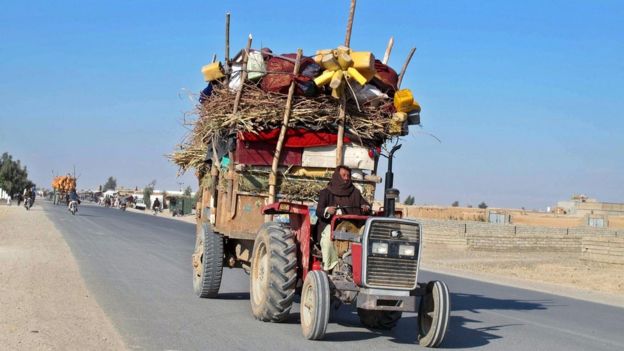
Haji Daud, the head of the Sangin district people's council, told the BBC that Sangin residents had fled the district to neighbouring areas.
Responding to the defence minister's claims, he said: "Those whose family brothers and siblings and parents are not fighting on the front, they always say the situation is not dangerous in the area..."
"Those who make such comments do not care to defend Helmand."
NASA's Dawn spacecraft, cruising in its lowest and final orbit at dwarf planet Ceres, has delivered the first images from its best-ever viewpoint. The new images showcase details of the cratered and fractured surface. 3-D versions of two of these views are also available.
Dawn took these images of the southern hemisphere of Ceres on Dec. 10, at an approximate altitude of 240 miles (385 kilometers), which is its lowest-ever orbital altitude. Dawn will remain at this altitude for the rest of its mission, and indefinitely afterward. The resolution of the new images is about 120 feet (35 meters) per pixel.
Among the striking views is a chain of craters called Gerber Catena, located just west of the large crater Urvara. Troughs are common on larger planetary bodies, caused by contraction, impact stresses and the loading of the crust by large mountains -- Olympus Mons on Mars is one example. The fracturing found all across Ceres' surface indicates that similar processes may have occurred there, despite its smaller size (the average diameter of Ceres is 584 miles, or 940 kilometers). Many of the troughs and grooves on Ceres were likely formed as a result of impacts, but some appear to be tectonic, reflecting internal stresses that broke the crust.
"Why they are so prominent is not yet understood, but they are probably related to the complex crustal structure of Ceres," said Paul Schenk, a Dawn science team member at the Lunar and Planetary Institute, Houston.
The images were taken as part of a test of Dawn's backup framing camera. The primary framing camera, which is essentially identical, began its imaging campaign at this lowest orbit on Dec. 16. Both cameras are healthy.
Dawn's other instruments also began their intense period of observations this month. The visible and infrared mapping spectrometer will help identify minerals by looking at how various wavelengths of light are reflected by the surface of Ceres. The gamma ray and neutron detector is also active. By measuring the energies and numbers of gamma rays and neutrons, two components of nuclear radiation, it will help scientists determine the abundances of some elements on Ceres.
Earlier in December, Dawn science team members revealed that the bright material found in such notable craters as Occator is consistent with salt -- and proposed that a type of magnesium sulfate called hexahydrite may be present. A different group of Dawn scientists found that Ceres also contains ammoniated clays. Because ammonia is abundant in the outer solar system, this finding suggests that Ceres could have formed in the vicinity of Neptune and migrated inward, or formed in place with material that migrated in from the outer solar system.
"As we take the highest-resolution data ever from Ceres, we will continue to examine our hypotheses and uncover even more surprises about this mysterious world," said Chris Russell, principal investigator of the Dawn mission, based at the University of California, Los Angeles.
Dawn is the first mission to visit a dwarf planet, and the first mission outside the Earth-moon system to orbit two distinct solar system targets. It orbited protoplanet Vesta for 14 months in 2011 and 2012, and arrived at Ceres on March 6, 2015.
Dawn's mission is managed by the Jet Propulsion Laboratory for NASA's Science Mission Directorate in Washington. Dawn is a project of the directorate's Discovery Program, managed by NASA's Marshall Space Flight Center in Huntsville, Alabama. UCLA is responsible for overall Dawn mission science. Orbital ATK Inc., in Dulles, Virginia, designed and built the spacecraft. The German Aerospace Center, Max Planck Institute for Solar System Research, Italian Space Agency and Italian National Astrophysical Institute are international partners on the mission team. For a complete list of mission participants, visit:
Iraqi forces are advancing into the centre of Ramadi, after launching a major assault to drive Islamic State militants from the city, officials say.
Security sources told the BBC that troops and allied tribesmen, backed by US-led air strikes, had already retaken two districts, and entered two others.
They are heading towards the main government complex, and have come up against snipers and suicide bombers.
Ramadi fell to IS in May in an embarrassing defeat for the Iraqi army.
Last month, government forces completed their encirclement of the predominantly Sunni Arab city, about 90km (55 miles) west of Baghdad, cutting off militants inside the centre from strongholds elsewhere in Anbar province and in neighbouring Syria.
Iraqi Counter-Terrorism Service spokesman Sabah al-Numani said its troops, supported by soldiers, police and Sunni tribesmen, had begun the assault on central Ramadi at dawn and were advancing on the gove"We went into the centre of Ramadi from several fronts and we began purging residential areas," he told the AFP news agency.
"The city will be cleared in the coming 72 hours."
"We did not face strong resistance - only snipers and suicide bombers, and this is a tactic we expected," he added.
Sources in the Iraqi military's Anbar Operations Command told the BBC that engineers had built temporary bridges over the River Euphrates, which flows along the north and west of the city centre. This had enabled troops to enter directly the al-Haouz district, south-west of the government complex.
By Tuesday afternoon, government forces had retaken the al-Thubat and al-Aramil districts, and entered nearby al-Malaab and Bakir, the sources said.
Sunnis to the fore - Lina Sinjab, BBC News, Beirut
If the battle to recapture Ramadi succeeds, it will be the second largest city after Tikrit to be taken back from the self-proclaimed Islamic State in the past 18 months. It would be a major boost for the morale of the Iraqi security forces and for those Sunnis opposing IS in Iraq.
That is not only because the city of Ramadi is predominantly Sunni and a key IS stronghold, but also because the forces fighting to take it back are spearheaded by Sunni tribesmen.
rnment complex.
The Shia-dominated paramilitary force known as Popular Mobilisation (al-Hashd al-Shaabi) has been involved in many battles against IS, but the government has chosen not to deploy it in Ramadi.
The force was accused of human rights abuses against Sunnis after the recapture of Tikrit in April, and it is believed previous atrocities carried out by Shia militias helped alienate Sunnis and push them into the arms of IS.
A spokesman for the US-led coalition against IS, which carried out at least 12 air strikes in support of the offensive on Tuesday, said the fall of Ramadi was "inevitable", but warned that it would be a "tough fight".
Col Steve Warren suggested there were between 250 and 350 IS militants entrenched in the city centre, with some hundreds more to the north and west.
The Iraqi defence ministry said the jihadists had prevented civilians leaving Ramadi since leaflets warning of an assault were dropped over the city last month.
"They plan to use them as human shields," spokesman Naseer Nuri told the Reuters news agency on Monday.
Col Warren said there were still thousands, possibly tens of thousands, of civilians inside Ramadi.
Sources inside Ramadi told the BBC that IS had carried out a campaign of raids and mass arrests of residents in districts still under its control, in an attempt to prevent an uprising in support of the government offensive.
The operation to recapture Ramadi, which began in early November, has made slow progress, mainly because the government has chosen not to use the powerful Shia-dominated paramilitary force that helped it regain the northern city of Tikrit to avoid increasing sectarian tensions.
IS has lost control of several key towns in Iraq to government and Kurdish forces since overrunning large swathes of the country's west and north in June 2014 and proclaiming the creation of a "caliphate" that also extended into neighbouring Syria.On Monday, analysis by IHS Jane's suggested that IS had lost 14% of its overall territory in Iraq and Syria, about 12,800 sq km (4,940 sq miles), over the past year.Despite this, the group has been able to capture new territory of strategic value over the same period, including Ramadi and Palmyra in Syria's Homs province. It also still controls the Iraqi cities of Falluja, east of Ramadi, and Mosul, in the north.464 gray lineWhat is Islamic State?A notoriously violent Islamist group which controls large parts of Syria and Iraq. It has declared its territory a caliphate - a state governed in accordance with Islamic law - under its leader Abu Bakr al-Baghdadi.What does it want?IS demands allegiance from all Muslims, rejects national borders and seeks to expand its territory. It adheres to its own extreme interpretation of Sunni Islam and regards non-believers as deserving of death.How strong is IS?IS projects a powerful image, partly through propaganda and sheer brutality, and is the world's richest insurgent group. It has about 30,000 fighters but is facing daily bombing by a US-led multinational coalition which has vowed to destroy it.
Banned Uefa president Michel Platini has accused world football's ethics committee of "sleeping" for four years before barring him from football.
Platini and Fifa president Sepp Blatter were ruled to have abused their positions over a £1.3m ($2m) "disloyal payment" made to Platini in 2011.
Both men are appealing against eight-year bans issued on Monday.
"What was the Fifa ethics committee doing between 2011 when I was paid and 2015?" said Platini. "Was it sleeping?"
In an interview with French media agency AFP, the 60-year-old former France captain added: "Suddenly it wakes up. Ah yes, it wakes up in a Fifa election year when I'm a candidate. It's amazing."
Swiss Blatter, 79 - Fifa boss since 1998 - had already announced he was quitting with a presidential election in February - with Platini, also a vice-president, tipped to succeed him.
Platini has been in charge of Uefa - European football's governing body - since 2007 and was backed in a statement on Monday, with the organisation saying it was "extremely disappointed" with the decision.
He has submitted his candidacy but cannot stand while banned from all footballing activities. Both men are appealing to the Court of Arbitration for Sport.
Platini said: "I will fight. But then I'll take my responsibilities according to what happens.
"Whatever happens, my reputation has been sullied, I've been kicked in the teeth: I've been put in the same bag as Blatter."