Wednesday, April 6, 2016

Migrant arrivals to Greece slow amid tighter security on Turkish coast

Tighter security along Turkey’s coast is a key factor behind a sharp fall in the number of migrants arriving in Greece under the EU’s deal with Ankara.
Three days after the agreement came into force, new arrivals on the Greek islands from Turkey dropped to 68 in the 24 hours to Wednesday morning from 225 the previous day, data from the Greek migration ministry showed.
One of those intercepted by the Turkish coastguard and brought back to Dikili in Turkey was Khodor Hosary, a Palestinian man living in Lebanon.
“I applied for a passport in Lebanon. I am Palestinian and I am not allowed to live or work (there). You know, the Palestinian crisis in Lebanon. We don’t have a country or a land,” he said.
“Why are they doing this to us? We have been humiliated. We almost died. We had children travelling with us.”
Anger is also simmering on the Greek islands where asylum applications are piling up as migrants and refugeesseek to avoid deportation to Turkey under the agreement.
After a break out from a holding centre on Chios, hundreds of migrants and refugees are sleeping rough at the port.
Some 202 people, the majority from Pakistan, have been returned from Greece since the deal was implemented on Monday. Up to 13 of those sent back are said to have intended to apply for asylum.
Also intent on applying for asylum is Abdul Wahid Dar from Pakistan, one of those now gathered at the Chios port.
Showing papers to reporters, he voiced his fears at the threat of deportation.
“I think all the dreams will be broken if this happens because we came here, we spent a lot of money for this.”
Deportations from Greece have been suspended since Monday, with authorities overwhelmed by the
spike in asylum claims.
On the Greek island of Lesbos, Ali, 22, from Pakistan, said:
“They sent back two guys and they committed suicide. They put a rope around their necks and hanged themselves. If we go back we won’t be able to handle life. Some people have sold their homes. If they are taken back, they will die. What will they do?”
Aid organisation Médecins Sans Frontières highlighted the plight of those awaiting deportation from the
Greek island of Samos.

Wednesday, March 30, 2016

US election: Trump steps back from Republican support pledge

US Republican front-runner Donald Trump has dropped his pledge to support the party candidate if he does not win the nomination for the November election.
Mr Trump's rivals, Ted Cruz and John Kasich, refused to say outright whether they would unite behind a nominee.
All the Republican candidates signed a loyalty pledge last November.
It is the latest sign of friction between Mr Trump and Mr Cruz, who have been embroiled in a dispute involving each other's wives.
A committee supporting Mr Cruz published a nude photo of Mr Trump's wife Melania from 2000. In retaliation, Mr Trump tweeted an unflattering picture of Mr Cruz's wife Heidi.
Mr Trump claims he has been "treated very unfairly" by Republican party leaders - some have expressed disquiet or downright opposition to him winning the nomination.
To a question about whether he maintained his loyalty pledge from last November, Mr Trump said: "No, I do not any more."
Earlier, when asked the same question, Mr Cruz did not give a direct answer but said: "I am not in the habit of supporting someone who attacks my wife and attacks my family."
Mr Trump later replied, saying he did not need Mr Cruz's support. "I have tremendous support right now from the people."

The billionaire has been repeatedly criticised by his rivals and observers for a campaign that has included personal attacks at rivals and criticism and violence against protesters.
Earlier on Tuesday, Mr Trump's campaign manager Corey Lewandowski was charged with assaulting a journalist at a campaign event.
Police said Mr Lewandowski grabbed former Breitbart reporter Michelle Fields' arm when she tried to ask Mr Trump a question, leaving a bruise.
Despite the numerous recent controversies surrounding him, Mr Trump is currently well ahead in the Republican race with 739 delegates to Mr Cruz's 465.
Mr Kasich is some way behind with 143, with the 1,237 needed to win the nomination probably out of his reach.
The three candidates have campaigned in Wisconsin ahead of next Tuesday's primary there.

Friday, March 4, 2016

Venera Osmani HAUHAUHAUHAUAHUAAHUAHAUAHAUAHAUAHAUAHA Hauhauhauhauahuaahuahauahauahauahauaha E përkthyer automatikisht

A Turkish court has put Zaman newspaper - a vocal critic of President Recep Tayyip Erdogan - under state control.
Administrators have been appointed to run the newspaper. There is no explanation for the court's decision.
Zaman is closely linked to the Hizmet movement of influential US-based cleric Fethullah Gulen, a former Erdogan ally.
Turkey describes Hizmet as a "terrorist organisation" aiming to overthrow the government. Many of its supporters have been arrested.
Mr Erdogan's government has come under increasing international criticism over its treatment of journalists.

Freedom of the press in Turkey


  • Turkey ranks 149th amongst the 180 countries in the Reporters Without Borders' World Press Freedom Index 2015
  • Media organisations in Turkey say that more than 30 journalists are currently behind bars
  • Most are of Kurdish origin
  • The government argues journalism in Turkey is among the most free in the world

In a statement, Zaman said the country was going through its "darkest and gloomiest days in terms of freedom of the press".
It expressed "deep concern" at the latest court order - the culmination of pressure for more than two years on Turkey's "highest circulating newspaper, Zaman, and its sister publication Today's Zaman". It said the pressure had been through "accreditation bans, tax inspections, meddling with its advertisers and threats to its readers".
Editor-in-chief Sevgi Akarcesme told Reuters news agency this was "the practical end of media freedom in Turkey".
"The media has always been under pressure, but it has never been so blatant," she said.

Steamrolling over rights

Dozens of supporters gathered outside the paper's Istanbul headquarters after the announcement of the court decision.
One held a placard saying, "We will fight for a free press."
Amnesty International's Andrew Gardner said: "By lashing out and seeking to rein in critical voices, President Erdogan's government is steamrolling over human rights.
"A free and independent media, together with the rule of law and independent judiciary, are the cornerstones of internationally guaranteed freedoms which are the right of everyone in Turkey," he said.
The move against Zaman comes days after Turkey's Constitutional Court ordered the release from detention of two Turkish journalists charged with revealing state secrets.
Can Dundar and Erdem Gul, from the newspaper Cumhuriyet, were detained in November over a report alleging that the Turkish government tried to ship arms to Islamists in Syria.
The pair still face possible life sentences at their trial on 25 March.
Two newspapers and two television channels were put under state administration last year over their alleged links with the Hizmet movement.
The Turkish government has accused Mr Gulen, Hizmet's spiritual leader, of trying to run a parallel state.
On Friday, state-run Anadolu news agency said police had detained four senior officials of a company linked to Mr Gulen in the central city of Kayseri.
Turkey has asked the US to extradite Mr Gulen. The exiled cleric has allies in the Turkish police and judiciary, media and financial interests as well as a network of schools.

Hizmet movement

  • Inspired by the teachings of Islamic preacher Fethullah Gulen, who lives in the US
  • Gulen is a mainstream Sunni Hanafi Muslim scholar, influenced by Anatolian Sufism
  • There is no formal structure but Hizmet followers are numbered in the millions across more than 150 countries
  • First expanded into Central Asia after the USSR's demise in 1991

Sunday, February 14, 2016

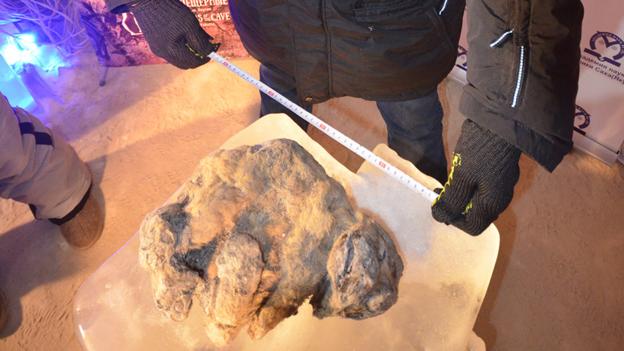
Two 12,000-year-old cave lion cubs have emerged from thawing ice in Siberia, preserved in remarkable detail


After thousands of years trapped beneath the ice, their young faces are still covered in fur. You can even make out the whiskers on their cheeks and the tips of their sharp retractable claws.
Named for the Siberian riverbank where they were found, Uyan and Dina are the most complete cave lion remains ever discovered. They could prove key to learning more about a species that became extinct over 12,000 years ago.
Over the summer of 2015, flooding along the Uyandina River exposed the ice lens where the cubs were buried. By a stroke of luck, a team of contractors was in the area collecting mammoth tusks. One worker, Yakov Androsov, spotted the remains through a crack in the ice.
Knowing they had uncovered the remains of a feline predator, Androsov immediately placed the cubs in a glacier to prevent thawing.
The cave lion once roamed everywhere from the British Isles to the Yukon in Canada
After so many years trapped in the harsh Siberian cold, the cubs are in surprisingly good condition.
"Their woolen cover, legs, tails, ears, eyes, and even moustaches were preserved," says Androsov.
While they cannot say for certain how old the remains are, Androsov says previous findings suggest they are more than 12,000 years old.
"The most likely cause of their death is a collapse of soil, which walled up the lion's den," says Androsov.
The cubs were probably between two and three weeks old when they died, as their baby teeth had not yet come through, according to Albert Protopopov, head of the Department of Mammoth Fauna Study at the Academy of Sciences of the Republic of Sakha (Yakutia). They were the size of well-fed housecats, and he says it is unclear if they had opened their eyes for the first time.
Until now, everything we knew about cave lions came from Stone Age art and fossilised bones.
One of the largest feline predators of the ice ages, the cave lion made its way from Africa to Europe about 700,000 years ago, gradually spreading to most of North Eurasia. The size of a modern-day Siberian tiger, the cave lion once roamed everywhere from the British Isles to the Yukon in Canada.
Plans for a comprehensive study are underway, with scientists around the world eager to contribute. Aside from determining the cubs' exact age, Protopopov hopes the findings will shed light on their lifestyle, family connections and nutrition, as well as the origin of the species.
Valery Plotnikov, chief researcher at the Academy's Department of Mammoth Fauna Study, has planned a summer expedition to further explore the area where the cubs were found.
You can follow Kara Segedin and BBC Earth on Twitter.
Like BBC Earth on Facebook and follow us on Instagram.

Saturday, February 13, 2016

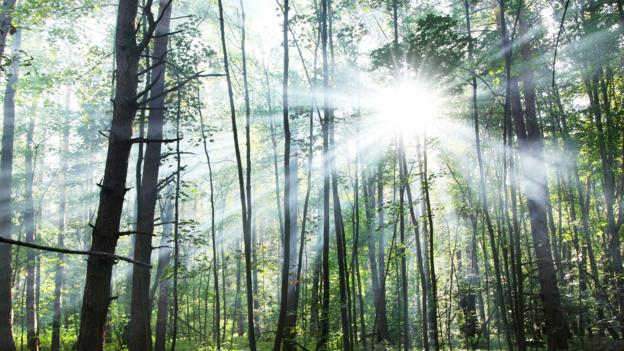
It's all around us and allows us to see the world. But most of us would struggle to explain what light actually is


Light is what allows us to understand the world we live in. Our language reflects this: after groping in the dark, we see the light and understanding dawns.
Yet light is one of those things that we don't tend to understand. If you were to zoom in on a ray of light, what would you see? Sure, light travels incredibly fast, but what is it that's doing the travelling? Many of us would struggle to explain.
It doesn't have to be that way. Light certainly has puzzled the greatest minds for centuries, but landmark discoveries made over the last 150 years have robbed light of its mystery. We actually know, more or less, what it is.
Not only do today's physicists understand the nature of light, they are learning to control it with ever-greater precision – which means light could soon be put to work in surprising new ways. That is part of the reason why the United Nations designated 2015 as the International Year of Light.

Gravitational waves offer ‘a new window on the Universe’

As the scientific world and enthusiasts marvel at the validation of Albert Einstein’s theory of the existence of gravitational waves.
What practical impact will it have on the science of astronomy?
Gianpietro Cagnoli at the Advanced Material Laboratory in Lyon provided parts for LIGO’s interferometers that captured the gravitational waves:
“This discovery opens a new window on the Universe. We have the opportunity to study in a completely different way obscure phenomena.
We have already understood for many years that the universe can be studied by observing with different instruments: traditional telescopes, radio astronomy, cosmic rays, high-energy particles, and now we have also added gravitational waves. And so we hope it will help raise our level of knowledge of the Universe.”
The full interview will be aired next week in our science magazine.

Tuesday, February 9, 2016

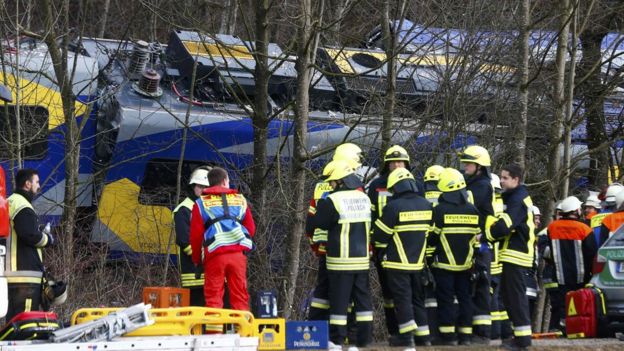
Germany train crash: Several killed near Bavarian town of Bad Aibling

Two passenger trains have collided in the German state of Bavaria, with police saying at least four people have been killed and scores injured.
The head-on crash happened near Bad Aibling, a spa town about 60km (37 miles) south-east of Munich.
One of the trains was derailed in the crash and several carriages were overturned, German media reported.
Police said rescue teams were trying to free people still trapped in the wreckage.
Regional police said in a tweet (in German) that four people were dead and about 100 injured, of whom 15 were in a critical condition and 40 seriously hurt.
"This is the biggest accident we have had in years in this region and we have many emergency doctors, ambulances and helicopters on the scene," another police spokesman, Stefan Sonntag, told the Associated Press news agency.
Regional train company Meridian said in a statement that "a tragic accident" had occurred on a single-track route between Rosenheim and Holzkirchen at about 07:00 local time (06:00 GMT)
Bernd Rosenbach, managing director of Bayerische Oberlandbahn which operates Meridian trains, told reporters: "The accident is a huge shock for us. We are doing everything we can to help the travellers, relatives and workers."
Technical manager Fabian Amini added: "Our thanks go to the emergency services and workers who gave their help so quickly."
The scene of the crash is close to the Mangfall river in a hilly and densely wooded region.
Although the trains were carrying commuters, local carnival holidays meant no schoolchildren were on board, according to reports.
The cause of the collision is not yet known.
Roads around the scene have been closed and the railway line between Holzkirchen and Rosenheim is blocked, local media reported.
German Justice Minister Heiko Maas tweeted (in German): "Really awful news from #badaibling - our thoughts are with the victims and injured. Thanks to the rescue workers"
Bernd Rosenbach, managing director of Bayerische Oberlandbahn which operates Meridian trains, told reporters: "The accident is a huge shock for us. We are doing everything we can to help the travellers, relatives and workers."
Technical manager Fabian Amini added: "Our thanks go to the emergency services and workers who gave their help so quickly."
The scene of the crash is close to the Mangfall river in a hilly and densely wooded region.
Although the trains were carrying commuters, local carnival holidays meant no schoolchildren were on board, according to reports.
The cause of the collision is not yet known.
Roads around the scene have been closed and the railway line between Holzkirchen and Rosenheim is blocked, local media reported.
German Justice Minister Heiko Maas tweeted (in German): "Really awful news from #badaibling - our thoughts are with the victims and injured. Thanks to the rescue workers"

Are you in the area? Let us know about your experiences but please do not endanger yourself. Email haveyoursay@bbc.co.uk with your stories.
Please include a contact number if you are willing to speak to a BBC journalist. You can also contact us in the following ways:
Or use the form below